
SERVICES

EcoVadis Sustainability Assessment
- Technical support for supplier sustainability evaluation on the EcoVadis assessment platform.
- Alignment of organizational practices with EcoVadis methodology and scoring framework across Environment, Labor & Human Rights, Ethics, and Sustainable Procurement
- Preparation of evidence-based documentation, policies, KPIs, and management system records required for assessment validation
- Gap analysis against EcoVadis scorecard indicators and risk-based assessment criteria.
- Development of corrective action plans and performance improvement measures to enhance sustainability ratings.
Environmental Product Declaration
- Preparation of third-party verified Type III environmental declarations in accordance with ISO 14025
- Based on Life Cycle Assessment (LCA) conducted as per ISO 14040 and ISO 14044 methodologies.
- Developed following applicable Product Category Rules (PCR) to ensure product-specific methodological consistency
- Includes quantified environmental impact indicators such as GWP, ODP, AP, EP, and resource consumption across defined life-cycle stages.
- Enables transparent environmental communication and compliance with global green building and procurement requirements.

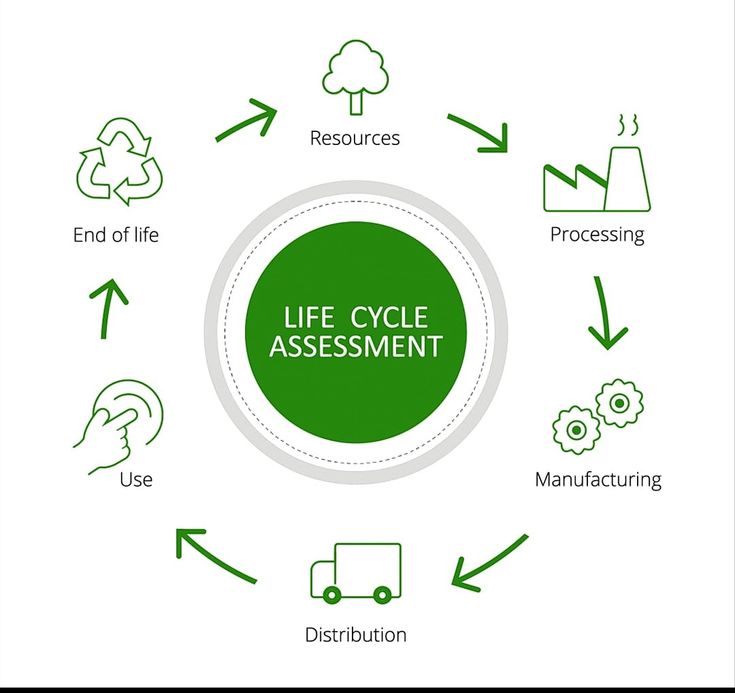
Life Cycle Assessment
- Comprehensive cradle-to-grave environmental impact assessment of products and processes.
- Defined system boundaries covering raw material extraction, manufacturing, distribution, use phase, and end-of-life.
- Follows standardized LCA methodology: Goal & Scope Definition, Life Cycle Inventory (LCI), Life Cycle Impact Assessment (LCIA), and Interpretation
- Incorporates Product Category Rules (PCR)where applicable to ensure product-specific methodological consistency.
- Conducted in accordance with ISO 14040 and ISO 14044 for scientifically robust and transparent environmental evaluation
Sustainability Reporting / ESG
- Development of ESG disclosures based on structured reporting frameworks including Global Reporting Initiative (GRI) Standards, Sustainability Accounting Standards Board (SASB) Standards, and Task Force on Climate-related Financial Disclosures (TCFD).
- Execution of double materiality and impact materiality assessments to identify financially and environmentally significant ESG topics.
- Establishment of ESG KPIs, performance metrics, and governance indicators supported by verifiable datasets and internal control mechanisms.
- Integration of GHG inventory, climate risk assessment, and value chain sustainability indicators into reporting architecture.
- Alignment with regulatory disclosure requirements such as Corporate Sustainability Reporting Directive (CSRD) and European Sustainability Reporting Standards (ESRS) to ensure compliance and transparent sustainability communication.


Digital Product Passport (DPP)
- Structuring of product-level digital datasets capturing material composition, environmental indicators, and lifecycle performance parameters.
- Integration of LCA-derived environmental data, including carbon footprint, resource consumption, and circularity metrics across defined lifecycle stages.
- Development of standardized data architecture and interoperable data models to ensure traceability across the value chain.
- Alignment with regulatory requirements under the Ecodesign for Sustainable Products Regulation (ESPR) introduced by the European Commission.
Global Reporting Initiative (GRI)
- Development of structured sustainability disclosures in accordance with the Global Reporting Initiative (GRI) Standards framework.
- Identification of material sustainability topics through impact-based materiality assessments aligned with GRI methodology.
- Compilation and verification of environmental, social, and governance (ESG) performance indicators including energy, emissions, water, waste, labor, and governance metrics.
- Structuring of GRI content index, disclosures, and management approach statements for transparent sustainability communication.
- Enables organizations to standardize ESG reporting and enhance global comparability and stakeholder transparency.

Business Responsibility and Sustainability Reporting
Preparation and structuring of disclosures in accordance with the Business Responsibility and Sustainability Report (BRSR) framework mandated by Securities and Exchange Board of India. Alignment of corporate sustainability data with the nine principles of the National Guidelines on Responsible Business Conduct (NGRBC). Strengthening transparent ESG reporting, regulatory compliance, and responsible business performance.Compilation and validation of environmental, social, and governance performance indicators, including energy use, GHG emissions, water consumption, waste management, workforce metrics, and governance disclosures. Development of BRSR Core indicators, value chain disclosures, and quantitative ESG datasets as per regulatory requirements.
Carbon Border Adjustment Mechanism (CBAM)
Technical assessment of embedded greenhouse gas (GHG) emissions in exported products under the Carbon Border Adjustment Mechanism introduced by the European Commission. Quantification and reporting of direct and indirect emissions associated with production processes in accordance with EU CBAM methodologies. Preparation of CBAM quarterly emission reports and supporting technical documentation for EU import compliance. Development of verified emission datasets, calculation methodologies, and monitoring systems aligned with EU regulatory requirements. Supports exporters in ensuring regulatory compliance and maintaining access to the European Union market.


Water Footprint Calculation
Quantitative assessment of direct and indirect water consumption across operations and supply chains.
Evaluates blue water, green water, and grey water footprints to understand total water impact.
Defines system boundaries and inventory data to assess water use at each stage of the value chain.
Conducted in accordance with ISO 14046 water footprint assessment methodology.
Supports organizations in identifying water-intensive processes and improving water resource efficiency.
Carbon Footprint Calculation
Quantification of greenhouse gas (GHG) emissions across Scope 1, Scope 2, and Scope 3 emission categories.
Calculation based on internationally recognized methodologies such as GHG Protocol and ISO 14064.
Covers emissions from energy consumption, fuel use, transportation, supply chain activities, and operational processes.
Utilizes activity data and emission factors to determine accurate CO₂e (carbon dioxide equivalent) emissions.
Enables organizations to identify emission hotspots, set reduction targets, and implement effective decarbonization strategies.